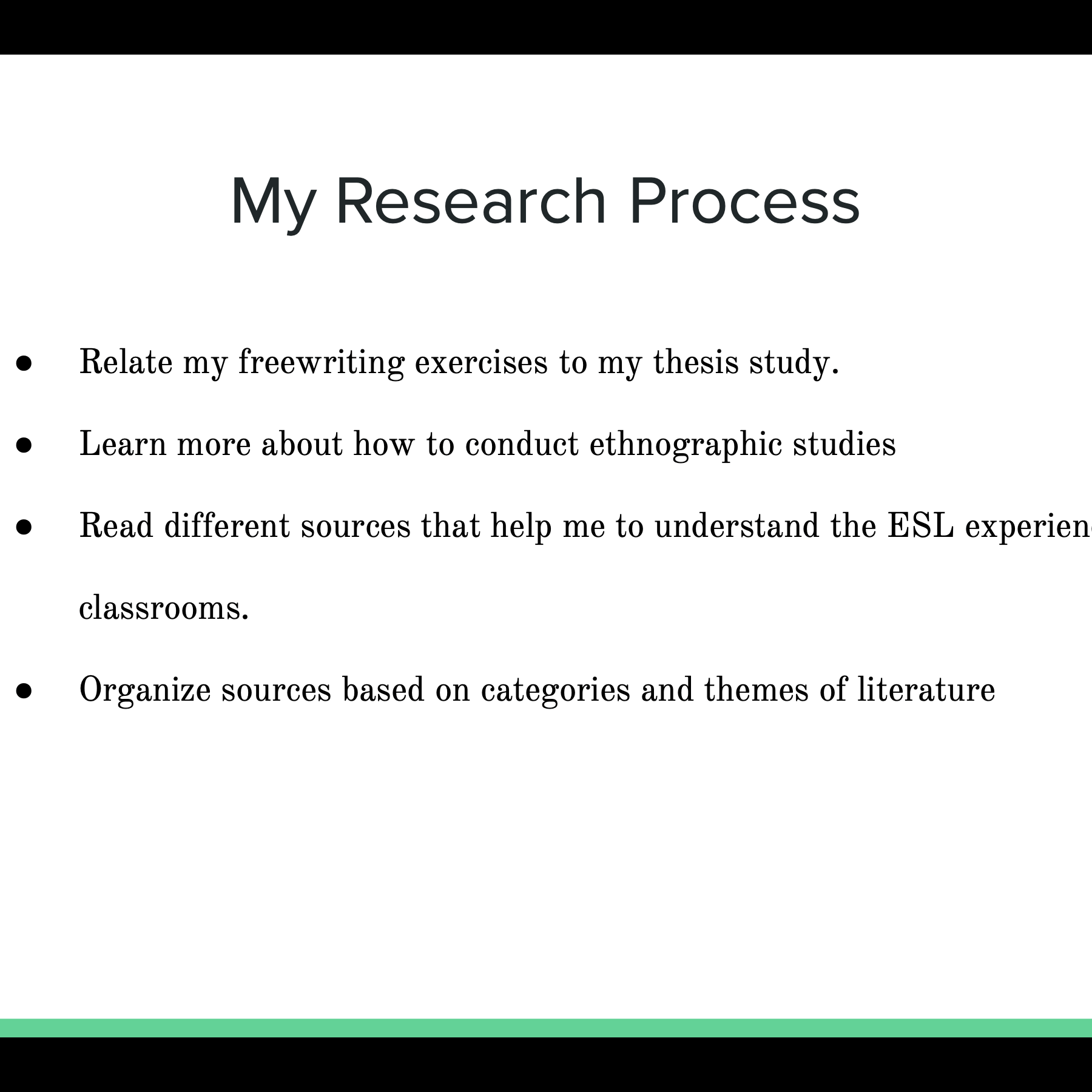
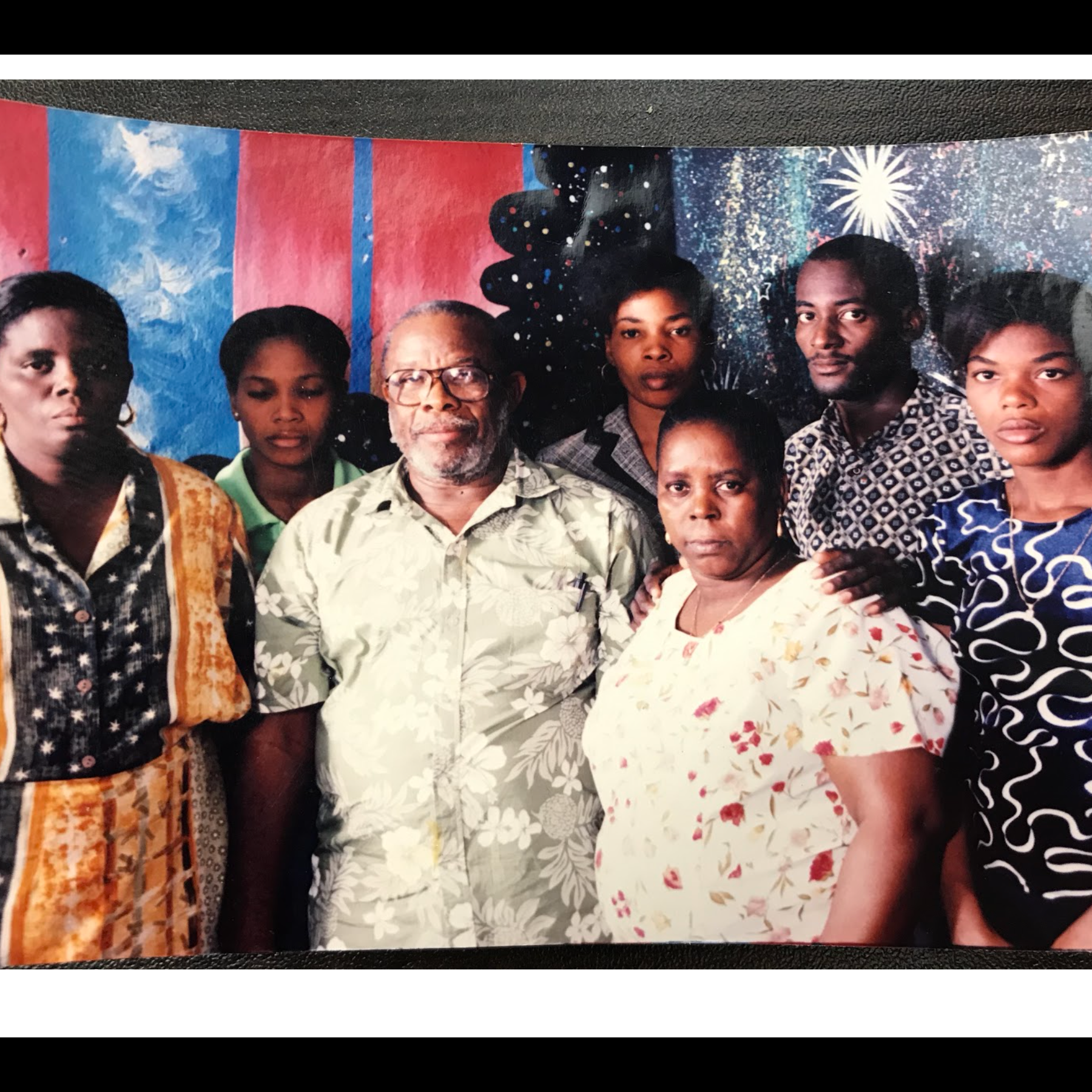
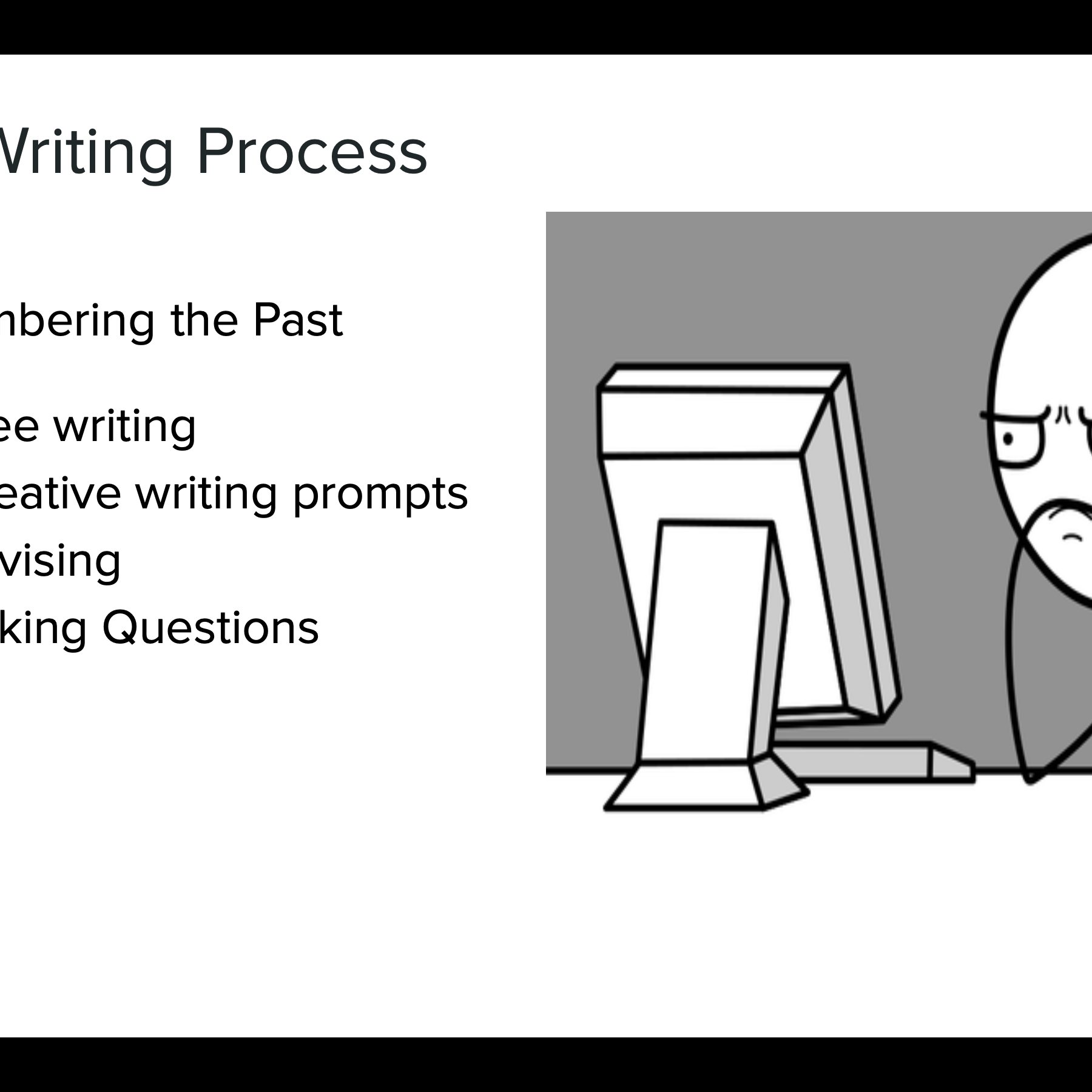
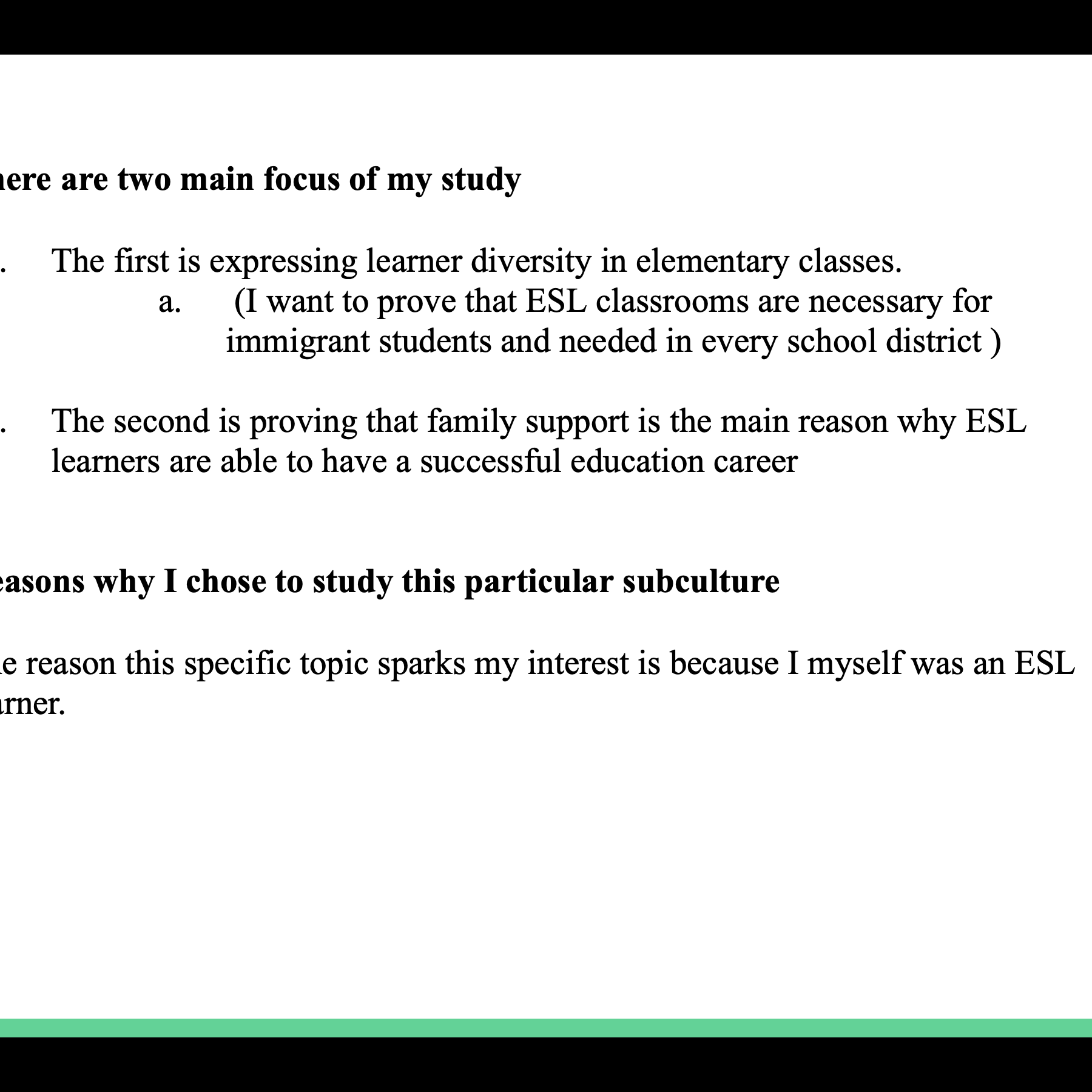
Hello and welcome back to another week! This week for me was pretty dull as far as thesis work goes. During the weekend, however, I got a great amount of work done for my class presentation next week which I am excited about! Class presentations have been going well and I’m happy to see how all of my other classmates are doing with their projects. As for me, I have completed a total of 20 slides and will spend this upcoming weekend revising and editing for the final content. I’m excited to share my proposal, lit review, and everything else I have completed so far for my research thesis.
You can take a peek at the images below
This week I also attended the Human Subject presentation by the IRB. The presentation was very informative and gave me a better understanding of what it means to have individuals and as part of research. I asked a question about whether or not I will need IRB approval for interviewing since some part or my reproach does include individual interviews. The presenter ( I don’t remember his name) replied that I would need approval if I intend to publish my work. I am not sure yet if I would like to do that. Overall, the zoom presentation was beneficial for understanding all the important behind the scenes work that has to get done for research.
Hi and welcome back to another week! This week I want to introduce you to some of my sources. One of my testing methods is interviews. Over the summer I have been transcribing some audio interviews. This past week I went back to this document to revise and edit the conversations. I intended to get two sources from each category (ESL educators, family, and ESL students) to discuss the ESL experience. For each source, I provide background details, interview notes, and interview reflection. Each source was asked the same questions. These questions are discussed in previous post mentioned. Even so, I will include the questions below for your reference.
The Questions
Please tell me about your experiences in an ESL classroom?
What is your greatest challenge being in an ESL classroom?
How important is the ESL classroom in the school?
Do you believe family involvement is important for English learning students?
Do you believe students learn language through interacting with other learners?
How important is the educational background of an ESL teacher? and how does it affect the classroom?
Do you believe all immigrant students need ESL learning?
I originally had a total of 12 questions but omitted a few to keep the interviews within a time limit and relevant for each source.
Meet The Sources
Mildred is a young Nigerian American woman who grew up in Tampa Florida with her parents and two siblings Kinsey and Kellie. She is bilingual, speaking both English and Yoruba. Both Mildred’s parents grew up in Nigeria and migrated to America when she was young to create a better life for her and her siblings. Mildred and her family are very business-minded and value education. She received her bachelor of science in Biology at the University of Florida, she is currently attending Rutgers University where she is completing a masters degree there and studying to be an RN nurse. Growing up Mildred participated in the ESL program and graduated with high honors in both grade school and middle school. Besides school, Mildred likes to do photography and visit museums in her free time. In the future, she plans to marry her current boyfriend and relocate back to Florida.
Gertrude after coming to America so late, my mother did not feel that she needed to learn a whole new language. She is only able to communicate in her native language (Haitian-Creole).
This interview was conducted entirely in Haitian creole and I translated the interview into English for this study.
Also some questions were omitted from this interview because they were insignificant for this interviewee.
James attends Rosa Parks elementary school in Orange, NJ. He and his parents are my neighbors. James agreed to participate in my research project because I offered to tutor him for the rest of the school year if he would answer questions about his experience in his class. James is 10 years old and he is from Puerto Rico. He speaks some English however, he is not fluent and still needs help learning the language.
Please Click HERE to Read the Complete Interview Transcript
Autumn is among us and there is always sometime in the air during this time of the year. In fact, fall is my favorite season so this cool weather has me feeling inspired and ambitious.
During last week’s class, Craig presented us with some useful information about Keans library. I have been their plenty of times and Craig is always so helpful! He definitely is an important resource in my research studies. My favorite tool to use in the library is the interlibrary borrowing. At first, I thought this would be difficult to do however, it actually is very easy to do. Often times when Kean’s library doesn’t have a book I need I can easily get the book from other university libraries nearby without the hassle of physically going to look for it there (this will be very useful in a time like this).
Reflecting
This week I took a break from reading and working on literature review and completed some free witting. What I wrote about is how I imagine ESL students are coping during this difficult time. Not only are they not familiar with the language but now that they have to complete homework and assignments without any help from an ESL teacher it must be very difficult for them. These students are not getting the help they need at home because their parents are unable to support them with school work that they also are unfamiliar with. I wonder how things are going at home and hoping that they have resources they need, like laptop, books, etc.I can imagine that at this moment they are not advancing as well as they would have if they were actively in a classroom with other students learning both socially and academically. It’s a proven fact that learning with others is a significant way for students and especially second English learners to learn effectively. I am hoping they are home right now doing their best.
Hi and welcome back to another week! Last week’s breakout session was a good way of breaking down a large group into a smaller and more intimate working group. It’s interesting that zoom has this feature and I would love to continue using this form of planning. This week I continued working on my lit review and I read two articles and reread another article that I discussed last semester, however, during the summer I had more time to dissect the reading and take better notes (this was a plus).
In the first article Constructing Grounded Theory: A Practical Guide Through Qualitative Analysis author Kathy Charmaz presents a detailed outline of how to conduct qualitative research in an autoethnography. In the second chapter of the book “Gathering Rich Data,” she explains how intensive interviewing is a method of research. In the chapter, she also presents a sample diagram of grounded theory interview questions about a life change. The purpose of the diagram is to show how textual analysis contributes to a competent research study. Furthermore, this chapter describes the proper procedures and techniques necessary to understand this research concept. Though the process seems extensive and requires much time it has to be done accurately and precisely to do good case analysis. The book did a great job explaining how methods of grounded theory are essential when conducting auto-ethnography.
In the second article Voice As Processauthor Lizbeth A. Bryant, brings forward the discussion of voice as a process of construction. In her study, she shows how students with varying voices can still be successful in the classroom. I plan to use this argument to prove that ESL students although they do not have the English language they are still capable and competent to succeed in the classroom. Although there may be a language barrier this does not mean that they are not able to make a connection using reasoning from their language. Additionally, I will use Bryant’s argument to make the point that ESL learners are smart and good students the only issue is the language barrier that holds them back. If schools continue to provide ESL classrooms to support these students they will begin to have a voice and language to support their studies. The highlight of this article is the part where Bryant shares some individual ethnographic stories about her students that are for research purposes. These stories show students using their voices. I want to use this example for my observation and pinpoint how I see my participants engaging their voice in a classroom environment.
Feeling Stuck!
Although my lit review is coming along. I am unsure what to do now as far as an observation. One of my research tools involves observing an ESL classroom and specifically identify how teachers interact with ESL students. Unfortunately, now that classes are all conducted online this will be a bit of a challenge. There is no way that I can complete this observation unless I join in on personal zoom calls which sometimes involve both students and parents. I hope to be able to figure out how to move forward in this step. Even so, I have outlined my plan for completing my thesis is this small calendar below.
September
Continue working on proposal and research outline
October
By October I expect to have my Literature Review completed because I have been working on it for a while and I believe have enough adequate resources including books, articles, and journals. This month I also present. So I would like to create a PowerPoint description of my thesis including the participants and interview data that I conducted during the summer months. (it was a lot of audio but I transcribe all the interviews in document form)
November
Begin writing thesis full: Introduction, including research methodology and discussion.I free wrote a background of my ESL experience last spring and I plan to include this part in my research thesis as a part of the methodology section. It is important to include my own voice in this study.
December
Continue working and revising to all sections in the proposalCompleting Research thesis
HI AND WELCOME BACK TO ANOTHER BLOG! It has been a long time since we have spoken but we are back at it again only this time I am more prepared and have been living this quarantine lifestyle for a while now. I am so excited to take a mother thesis course to continue working on my project. There are a lot of things I am excited about this semester.
The first being that we have a new president! I am always excited about change and I am loving the initiatives our new president has taken for the university thus far. I must admit that I did not believe at first that campus would even be open this fall (because of COVID -19 of course). Nonetheless, I am glad that campus staff and leadership have taken the necessary precaution to reopen the campus safely for students and provide the resources necessary for us all to get through this. Even though this semester will be unusually different from any other semesters that I have been a student I understand that we are in unprecedented times right now and no plan in 2020 is normal.
Secondly, I am excited about the opportunity that I will have this semester to operate in a realm that I am not very comfortable in. To be honest I am not too thrilled about online learning mainly because I am unable to be around other passionate learners and enjoy the feeling of being a college student on campus. Even so, this new teaching approach will allow me to experience a way of learning that can become the norm in the future, and thus I will be more equipped to delve into technology and communicating through the web. I’ve learned in other classes about connected learning through the internet and this semester I will become competent in this area.
Lastly, I am excited to complete my final semester of grad school! Wow, it feels good to realize that the finish line is closer and more near to me now. I have heard from other previous grad students who have said that the time will fly by swiftly and the semesters will flash before your eyes. Lately, I have been coming to terms with this thought. I often feel like times are really flying by and my graduate career will soon come to an end. With this knowledge, I plan to take with me all the memories I have made with classmates and professors to carry me on to finish the semester strong. When I think back of the experiences I’ve had and will create this fall, I want to be glad that I was a Kean Cougar.
Summer Shenanigans
As the summer comes to an end and classrooms begin to reopen its a sorrowful feeling that warm summer days are going to be behind us and we will have to look forward to dreaded snowstorms and ice cold days. I did, however, have a great summer even with the abnormal conditions that our world is in now.
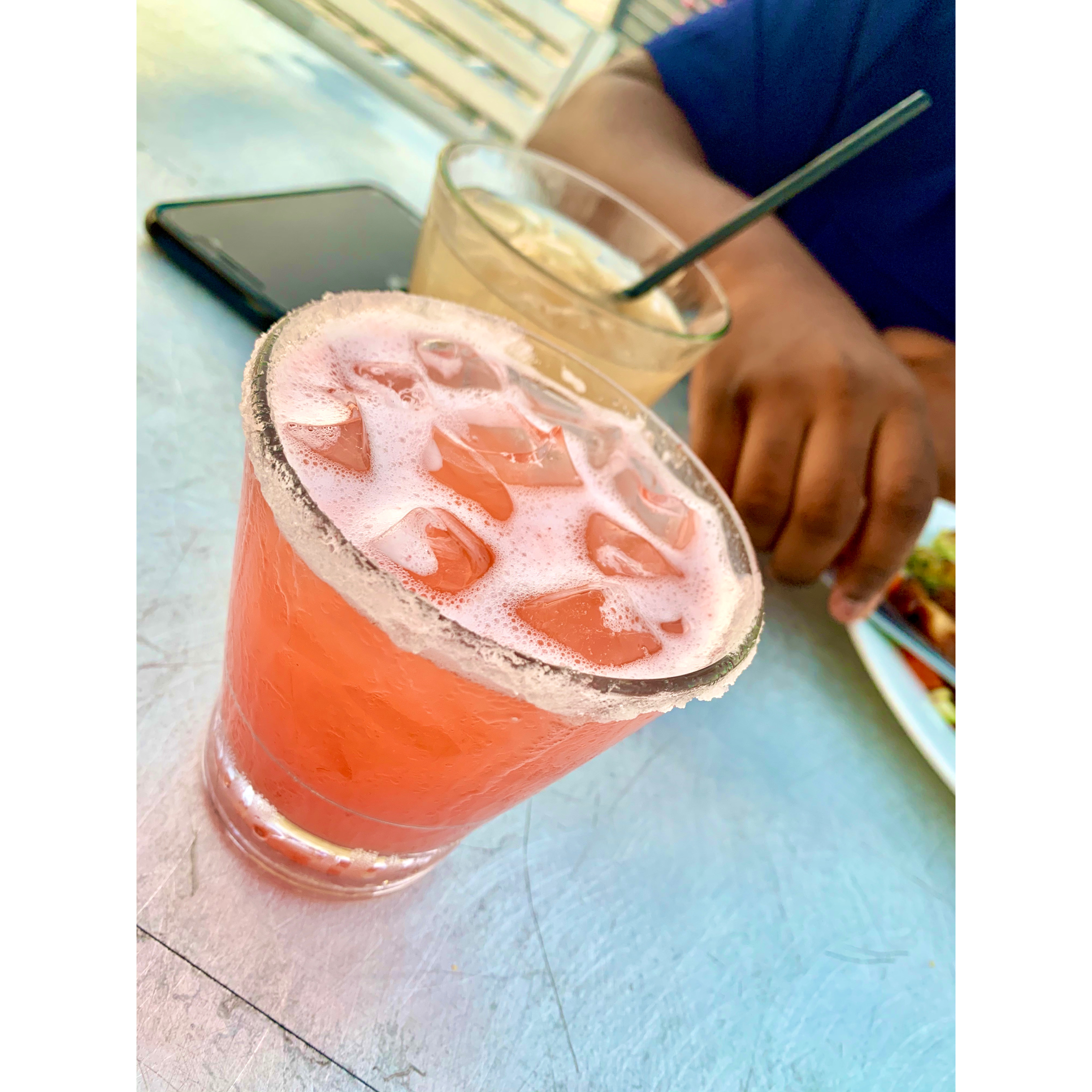
This summer I wined and dined with the city skyline.
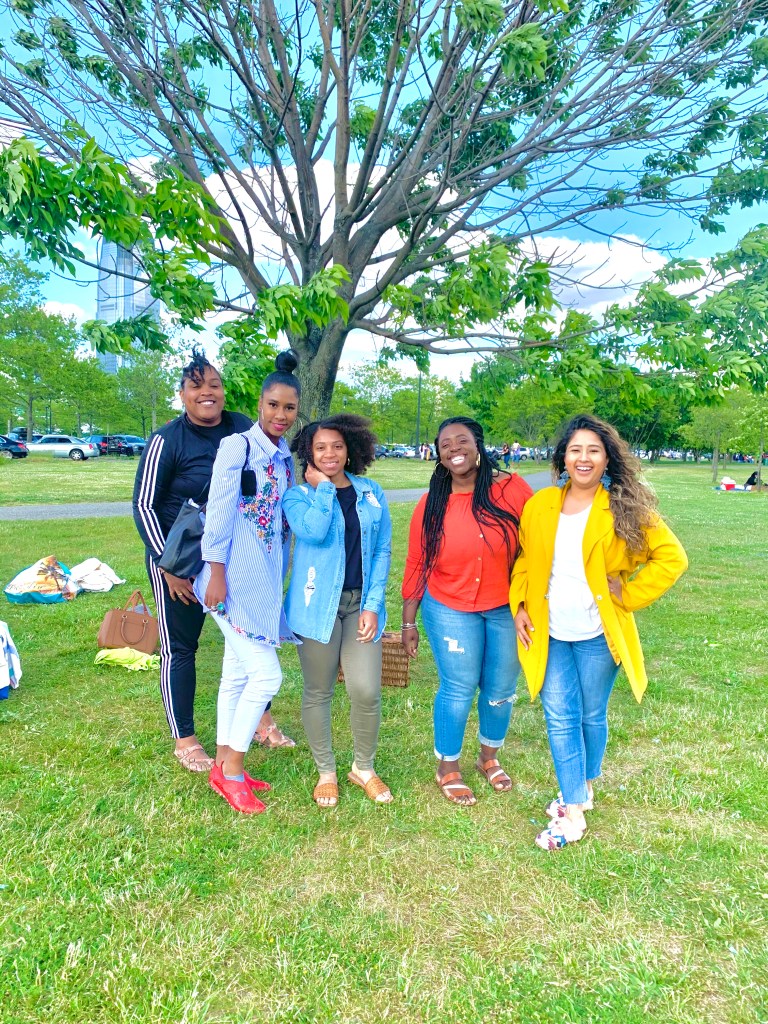
I enjoyed picnic days with the girls.
Went to the beach…
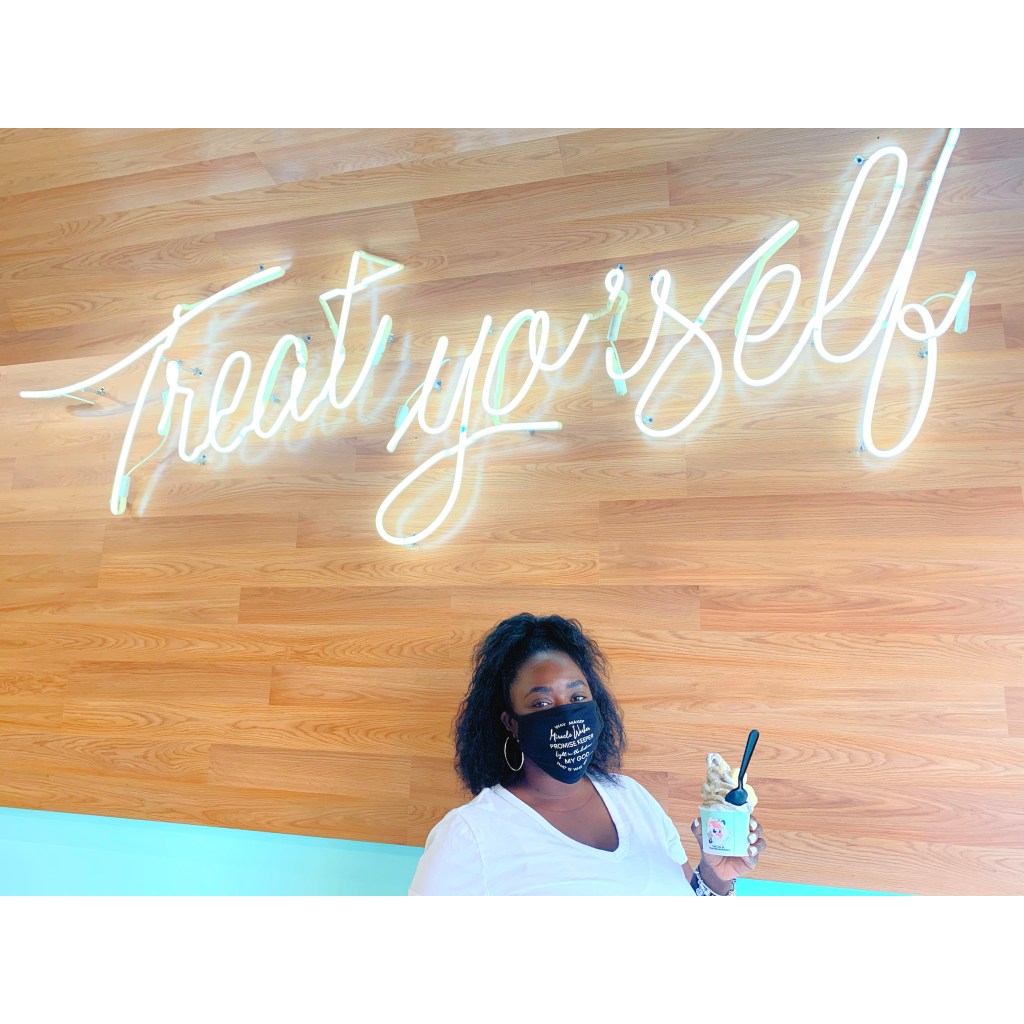
and enjoyed some ice cream with the family.
I hope you had a great summer as well! Can’t wait to work hard and learn something new this fall! See you next time!
Hi and welcome back to another week! Today is the last class of the semester and honestly where did all the time go! 2020 has been such a whirlwind that it seems like everything is just happening and moving swiftly. Summer soon come yet we still don’t know if our society will return to a normal as it was before. Even so, I hope for the best and wish everyone continue to stay safe and sane because we are all in this together.
Summer 2020
My thesis work has been moving slowly but surely this semester. This summer, however, I want it to be different. I plan to have a more gazelle-like approach moving forward. There are several goals and ideas I have in mind to continuously work on. I’ve created a timeline for these goals.
June- Read, Read, Read!
Work on bibliography
Literature observation and resources
With school coming to an end and also the world stopping (lol basically), I will have all the free time to read more. In this month I want to work on the bibliography part of my research. Literature observation is also the root of this project because it helps to understand the reasons for my questions.
Background information
I also want to continue working on my personal background story. This is the essence of my auto-ethnography research so I want to include as many relevant details from my story for research purposes.
July- Ask The Questions
This month I plan to conduct case analysis with interview questions that I have created in the last blog post. This will include meeting with individuals and create times for discussions. While interviewing I plan to write down answers and also audio record interviews just in case I miss anything. This method of observation will most likely extend into the next month.
August- Get The Facts
I want to include statistical research information in my auto-ethnography to support my research claims. The US Census provides accurate information and numbers for any type of research. I want to use this platform to have a more realistic idea about the percentages of students who are in ESL classrooms yearly using an information pool for just the state of New Jersey. Another point I want to research is the description of the total number of school districts that offer ESL classes in the elementary grade level. With these results and data, I collect I want to analyze this research information in my study.
These are the plans I have for summer 2020! I’m not sure what this summer holds, hopefully, the world as we knew it begins to come together again, and life is not difficult. I want to go outside again and sit in a park without the fear of dying. Please, everyone, stay safe and healthy, until next time : )
Hi and welcome back to another week! I hope you are staying safe and indoors for yet another week of quarantine. This weekend I revived and edited some of the base questions presented from last week. Below is an updated list of these questions.
Developing Questions
Please tell me about your experiences in an ESL classroom?
How has your family influenced your success in learning while in an ESL education?
What factors create a challenge in learning a new language?
What is your greatest fear about learning a different language?
Do you believe family involvement is important for English learning students?
What are your views about being in an ESL classroom?
How important is the ESL classroom?
Do you believe students learn language through playing/ behaving with other learners?
What is your greatest challenge being in an ESL classroom?
How important is the educational background of an ESL teacher? and how does it affect the classroom?
Do you believe all immigrant students need ESL learning?
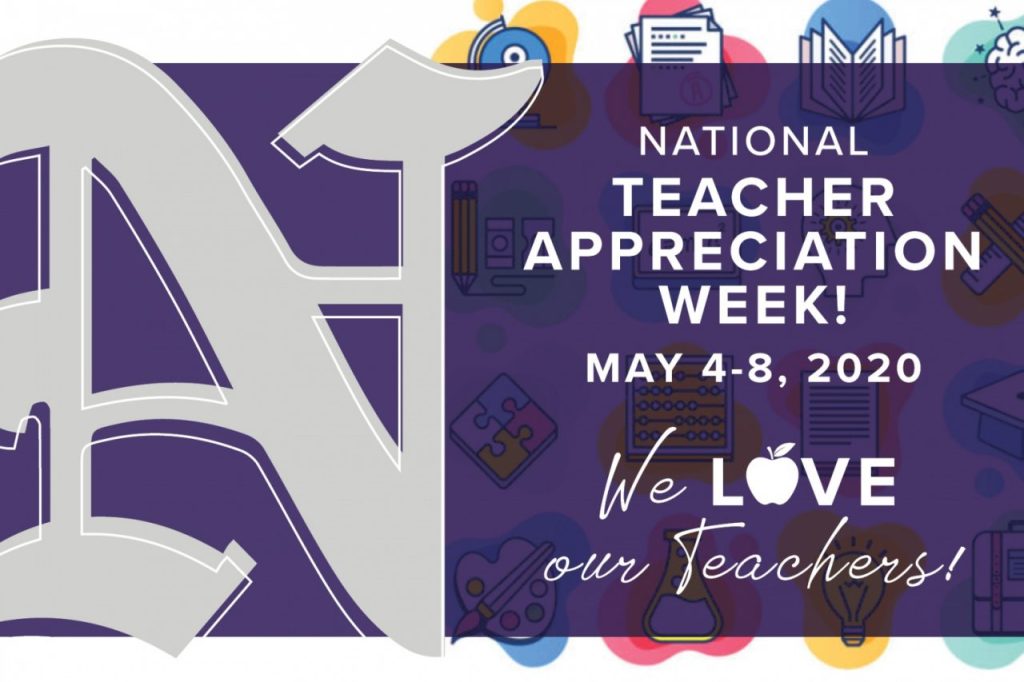
Teachers Appreciation Week 2020!
I hope you all have an amazing week. This week is also a very special one, its teachers’ appreciation week! Teaching during this unprecedented time can be very difficult. Teachers are doing the same level of dedicated work while they are home also trying to survive this quarantine lockdown. Their work is thankless and very much appreciated! We love our teachers and encourage every one of them during this pandemic.
Hi and welcome back to another week! Hope you are handling this quarantine thing better than me (who knows how long we will be held hostage in our homes) haha JK. Everyday is going by so fast, it feels like April is coming to an end already when it just started. On the more positive side this means summer is fast aproaching! I’m happy to dive back into the semester and finish strong.
So What Has Darline Been Up to?
I’ve done some free writing this past two weeks reflecting on my childhood experiences as an ESL learner. The first free-write is posted in a previous blog post (so check that out when you get a chance). The second free write I completed on a scrap page sheet and didn’t get to upload a document of my thoughts. Even so, what I noticed between the two free-writes is the determination I had to learn the language. Going to school eaveryday for me was exciting (perfect attendance four years straight)! Growing up I felt that the only barrier between me and society was not being able to communicate. I was nervous to go outside because my neighbors were playing and speaking English and I didn’t know how to interact that way. My classmates at school were making jokes in English and I couldn’t laugh because I didn’t understand. I also didn’t enjoy doing other things because of the language barrier. School for me was my safe haven, my classroom specifically was my sanctuary. There my teachers spoke to me in French and encouraged me to keep learning. Looking back now I understand that elementary work was easy but at the time it was difficult for me.
Another comparison I noticed between the two free writes was the involvement of my family in my education. From elementary to high school my family was very involved in my learning studies and the activities I was involved with at school. They came out to parent-teacher conferences, school plays, choir, and summer activities. It was important for them to stay on top of how I am learning in school. I believe that is another reason why I was more progressive in ESL classes.
Moving Forward
Capturing my childhood experiences is a quintessential step for forming the background of my autoethnography. It is the rooted seed needed to build a bigger tree. In this next step, I created a list of interview questions that are neutral to ask three different groups of people. That is me, an ESL teacher and ESL learner.
What if the ESL classroom did not exist?
Why do you believe ESL learners struggle with language in the classroom?
What is your greatest fear about learning a different language?
What would have to change in order for immigrant students to acclimate to American education without needing ESL classes?
What did you assume about ESL learning?
How important is the ESL classroom?
How might you incorporate language learning into social learning?
What is your greatest challenge being in an ESL classroom?
How important is the background of an ESL teacher? and how does it affect the classroom?
Do you believe all immigrant students need ESL learning?
Grounded Theory
These questions serve as a tool for case analysis. Case analysis is part of qualitative research, a method rooted in theories of autoethnography. In the book Constructing Grounded Theory: A Practical Guide Through Qualitative Analysis author Kathy Charmaz presents a detailed outline of how to conduct qualitative research in an autoethnography. In the second chapter of the book “Gathering Rich Data,” she explains how intensive interviewing is a method of research. In the chapter, she also presents a sample diagram of grounded theory interview questions about a life change. The purpose of the diagram is to show how textual analysis contributes to a competent research study. Furthermore, this chapter describes the proper procedures and techniques necessary to understand this research concept. Though the process seems extensive and requires much time it has to be done accurately and precisely in order to do good case analysis.
If I can describe the past two weeks in one image this is what it would be.
To describe it plainly the past few weeks has been so stressful and annoying. Mainly because the COVID-19 is happening and everyone is reacting like this…
The fear of the unknown is making people panic and making sudden decisions abruptly.
My entire world has been a series of unfortunate events happening with work, social life, and other things. During the past week, I’ve been working every day as if the world will end ( why?) because my job can suddenly shut down and everyone would have to work from home and students will have to learn from the comfort of their living room couch. This has created a lot pressure on me and other staffs to formulae a plan for how this is going to work (if/when schools shut down). This has happened in most counties and this is where we are now. Other sudden changes have happened too like important meetings being pushed to different days and staff development trainings canceled among other things (including spring break). Like how will I survive the rest of the school year. Also, my friends have canceled a dinner date, my Zumba instructor canceled class and even the town library is starting to close early.
On A Larger Scale
Government officials and county leaders suggest everyone practice social distancing and personal hygiene (Which for some people translates to buy all the paper towels in stock at every store). I mean seriously why are people like this. This whole ordeal has made me so upset with society and realizing once again that people are utterly annoying. (Really hope this social distancing practice will calm me down)
I’ve gone to my local Shoprite three times this past week for groceries and still not able to purchase everything on my list. (I didn’t even consider Costo because I just cannot with the waiting lines and the stabbing and all the terrible things happening at every Costo)
So What About The Lit Review
With the crazy week I’ve had I did not get a chance to read any books but I did get to read Anne-Marie Dietering’s introduction of Why Autoethnography. Her article goes in-depth on the research of academic autoethnography studies and the challenges of this research. she describes her encounter with the spark that first made her interested in this study when her husband started working with a thesis student. Her discussion of this research emphasized the importance of community and researching the community that examines culture and history. After reading this article I decided to create a small project with just my family. This project is a list of languages in my family and a different experience with the language.
Another article I read last week was Critical Auto Ethnography in Pursuit of Educational Equity.
In this collective article the authors Chang, Heewon. Marx, Sherry and Pennington, Julie discuss that autoehtnnograghy research is rooted in devenelopemnt of socials sciences. The artcle introdice other autoethnogpraphies
In this collective article, the authors discuss that autoethnography research is rooted in the development of socials sciences. The article introduces other auto-ethnographers and briefly describes the type of research they conducted in studies of autoethnography. The purpose of this article presents how the individual experience calls for the understanding of all people. One very important quote that stood out to me was in the conclusion of the text which states,
“While educational research from all traditions informs practice, policy, and instructions, auto-ethnography with its focus on lived experience identity and perspective has the potential to impact educators deeply as they seek understanding and justice for alls students. (pg. 4)