
Hey there and welcome back to another week. Let’s talk about what’s been going on in my side of town lately. I have been thinking of how to make my broad ideas smaller much more personal. This past week I have been researching and learning about autoethnography. Autoethonogpray is a theoretical method that uses both qualitative and cultural analysis to present the experiences of one individual (I will use myself for this case study). In essence, autoethnography is a type of research that puts the self at the center of cultural analysis. This method requires the individual to be descriptive of their past experiences and present a complete truthful narration of self in order to understand the personal background driving the study.
After researching this theoretical method I believe it is the best approach that will make my research thesis compelling while also expressing learner diversity in elementary classes.
How to Do Ethnography Research
Well, of course, there is a youtube tutorial on almost anything out there. So before I engaged in any intellectual research/ reading I first watched a few videos on what is autoethnography. Here is a short and edifying video about the topic.
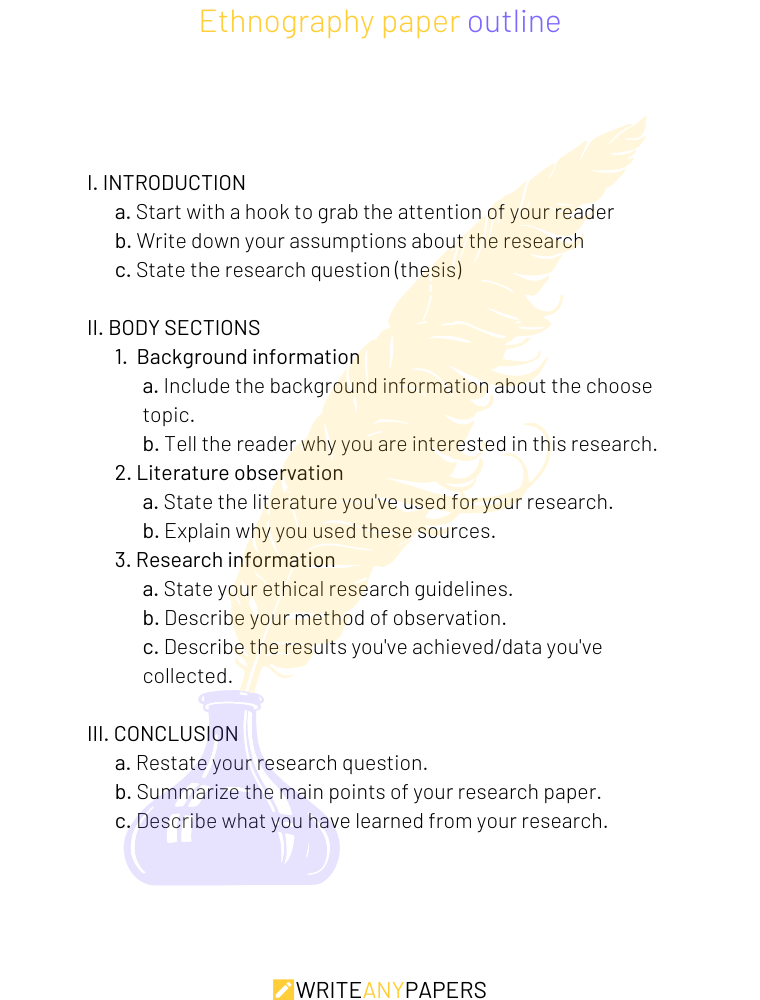
After some visual learning, I then read about how one would exactly go about doing this type of research. The image below presents a detailed outline of what’s included in each step of autoethnography research. In the background section is where I will discuss my personal experience as a former ESL student and my passion for doing this research. In the next two sections is where I will conduct most of the academic work. This is where I will need to create and to present a comprehensive review of literature that I find most relevant and suitable to study. I do not yet have a list of articles/books (and historical essays) to research but will soon create one. Lastly, the way I plan to gather and analyze data is by conducting interviews and doing observations. I believe these are the best two ways to get adequate personal details necessary for this research. I want to interview a former ESL teacher and also a current ESL student. The reason that I want to include those two case studies is to not only discuss my own experience but to have others that I can reference as well. ( Also, it will help this research thesis to not be all about me). I plan to observe an ESL classroom to experience once again how it feels to be an ESL student.
ESL In The Classroom
I read an article this week about the experience of bilingual writers. In the article THROUGH STUDENTS’ EYES: THE EXPERIENCES OF THREE ESL WRITERS university professor Vivian Zamel conducts a close study that analyzes the personal experience of three ESL student writers. The three students Carlos, Mohammed, and Nham experience a great deal of difficulty as an ESL writer but what they found most rewarding was the supportive and effective instruction of their teachers.
In an interview, Mohammed states that,
The teacher wants to know about the ideas in your mind. She takes ideas serious. This makes me feel good. The teacher wants to talk to you, wants to know what’s on your mind and you feel courage to revise … All these books won’t help, you won’t use your brain. You never develop your ideas.
pg.88
It wasn’t just the students who found writing in an ESL classroom difficult, but so did the teachers. The teachers argued that the instructional models and the expectations we make about our students are whats hindering the creativity and flexibility of ESL writers (Emphasis mine) (The terms language acquisition and writing development are further discussed). As a result, they suggest that ESL students should not be graded on words they do not know rather they should have the freedom to create meaning and ideas that stimulate stories even if they don’t have the exact words for it. By doing this, ESL writers will learn the English language more easily.
This article provided an informative insight into the experience of what it is like to be a foreign writer in the classroom. While the research data was analytic and extensive it presented a selective way of gathering data. In my autoethnography, I want to focus more on the student experience in the classroom as an ESL learner in all subject fields.

 Darline's Thesis Creation