
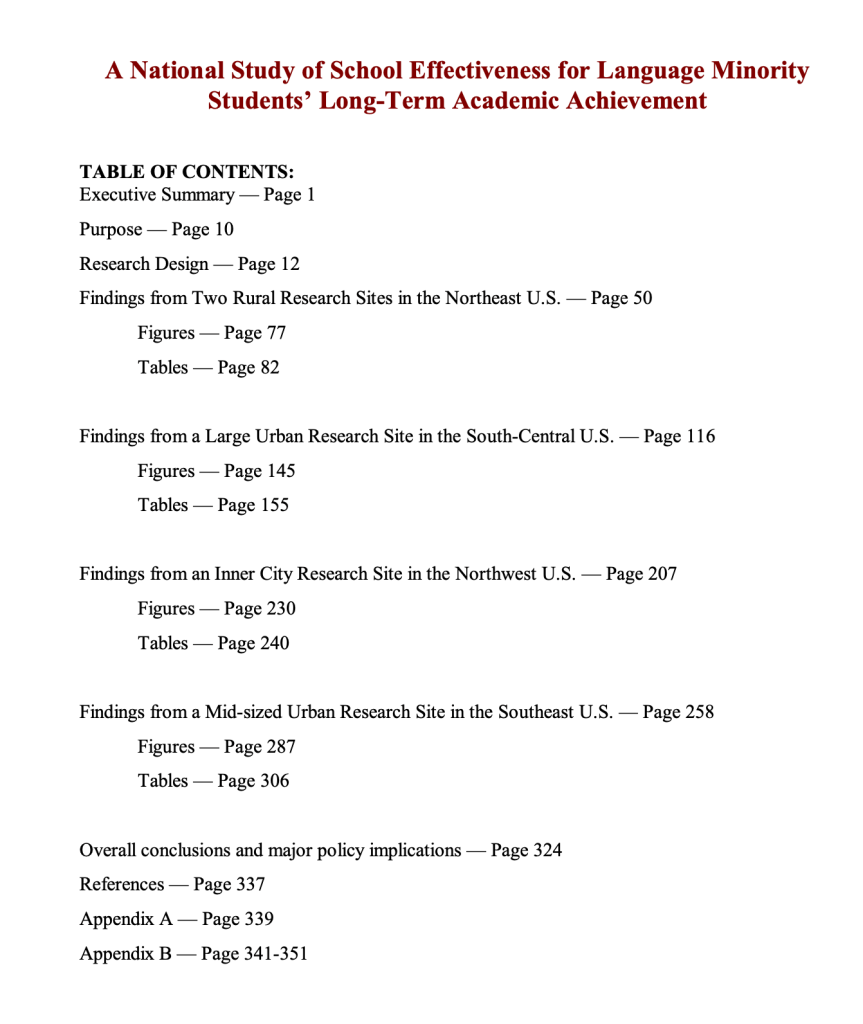
Hi and welcome back to another week! This week I have been researching more research and data information about ESL statistics. There are two research that I want to share with you today. Both pieces of research are extensive in details and information, I will share some highlights and standout quotes. The first research is from A National Study of School Effectiveness for Language Minority Students’ Long-Term Academic Achievement. In this study researchers Wayne Thomas and Virginia Collier conduct a five-year study from 1985 to 2001 that “focused on analyzing the great variety of education services provided for language minority (LM) students in U.S. public schools and the resulting long-term academic achievement of these students.” (pg. 0). This study included both qualitative and quantitative research, the focus group was primarily Grades K-12, and the observations were all over the U.S from five urban and rural research sites in the northeast, northwest, south-central, and southeast. This research report was very informative and provided reliable data I will use this research in my thesis to discuss why ESL classrooms are essential in NJ elementary schools. Here is a snapshot of the entire report (please click the link above to take a look at the full research).
Researchers have projected that 40% of the school-age population in the United States will be ELLs by the year 2030 and most U.S. schools are currently under-educating this student group. (Thomas and Collier, 1)
When ELLs initially exit into the English mainstream, those schooled all in English outperform those schooled bilingually when tested in English. But the bilingually schooled students reach the same levels of achievement as those schooled all in English by the middle school years, and during the high school years the bilingually schooled students outperform the monolingually schooled students (see Figure C-2). (pg.8)
The highest quality ESL Content programs close about half of the total achievement gap.
_______________________________________________________________________
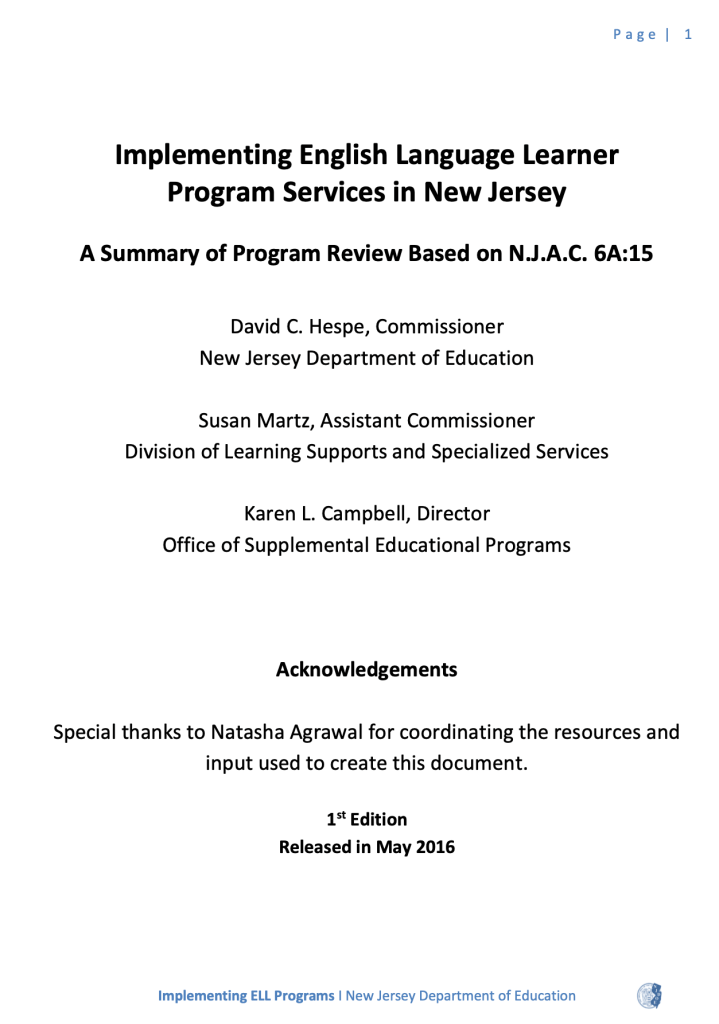
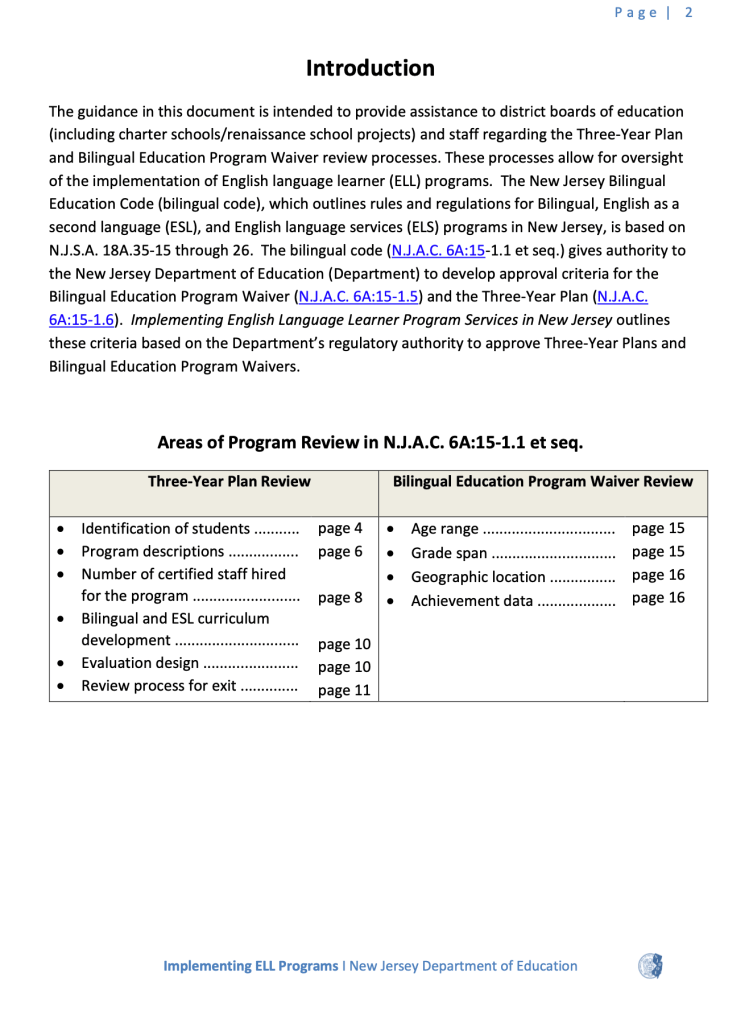
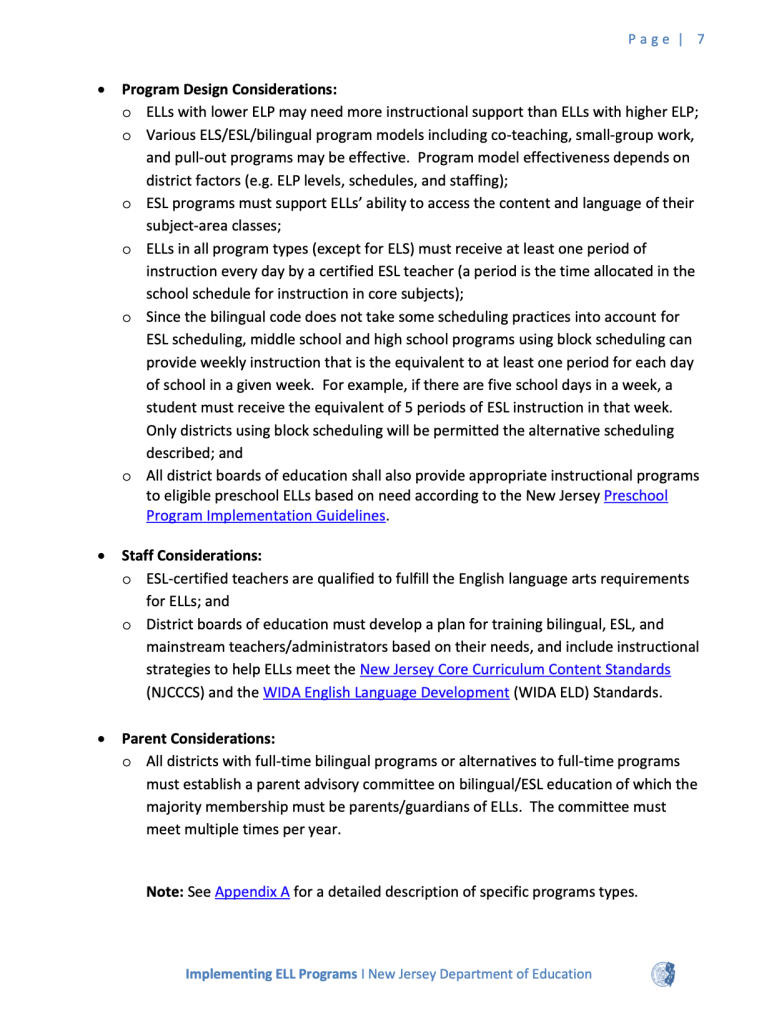
The next information is from NJ.GOV bureau of educational programs Bilingual and ESL education: Implementing English Language Learner Program Services in New Jersey
This report focuses only on the ESL population in New Jersey. This research presents a three-year plan for the New Jersey Department of education to develop criteria for English language learner programs. I love that this program design is targeted to all three groups parents, staff, and students. The report breaks down the steps to incorporate ESL in schools, how leaders can engage with families, and also presents statistical data for each finding. I plan to use this reproach in my thesis to present ways that schools can create ESL programs that incorporate the communication and participation of all three parties. (please click the link above to skim through all the details)
Both research studies aimed to understand the ESL community and provided resources and ideas on how school districts can best serve this group. I hope you enjoyed the information as much as I did. I look forward to connecting again next week!
Also as tensions rise amid politcal changes, I leave you today with a friendly reminder.


 Darline's Thesis Creation